list of America's fastest-growing companies.




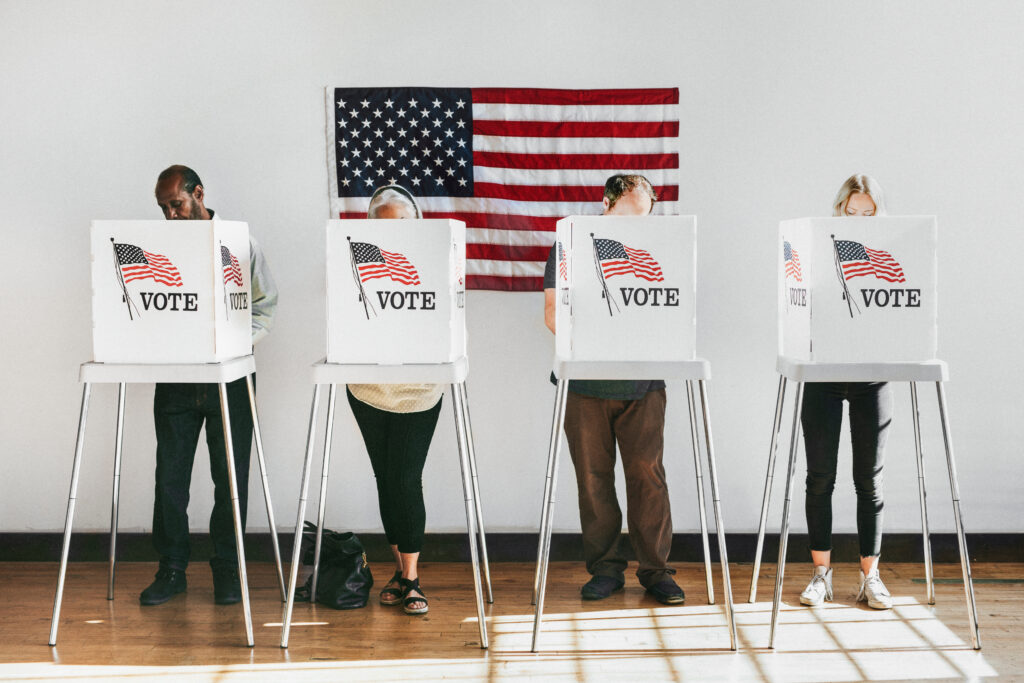
We have an important midterm election coming up this year, but not everyone is ready to vote.
This year’s midterm election will determine:
- Which party controls the House of Representatives and the Senate
- 36 gubernatorial offices
- 160 statewide ballot measures
From 2018 to 2022, turnout for midterm elections declined among 18-29 year olds in forty-one states. Black and Latino voters were less likely to turn out, especially those in younger brackets. Only 11 states saw a turnout increase for nonwhite voters. (Our recent Get Out the Vote white paper goes in depth about the state of voting in 2026.)
Since the last midterm election, the U.S. population of eligible voters who are Hispanic has grown by 16%, and those who are Black have grown by 6%, all while the White population of eligible voters has declined by 2%. For this expanding multicultural electorate, it’s imperative to get out the vote: compared to total U.S. registered voters, Black voters are 10% less likely and Hispanic voters are 21% less likely to reliably vote in every election.
Audio marketing has an outsized impact on the multicultural voter: compared to all voters, radio and podcasts are 20% more likely to influence Black voters and 15% more likely to influence Hispanic voters in their decisions at the poll. Within all of these groups, iHeartMedia reaches nine out of ten registered voters every month.
Every Get Out the Vote (GOTV) initiative is, at its heart, a behavior change challenge. Successful GOTV efforts require:
- a) understanding the barrier to action
- b) identifying behavioral levers
- c) selecting a trusted messenger or delivery method
and only after all those steps, choosing the channel.
People need to know just how important it is to vote on November 3. At Version2, we can help you reach niche audiences where they are already listening to and reading trustworthy, relevant, interest-based, and often entertaining media. The next step is empowering your audiences to take action.
What Leaders Need to Know
|
From Background Noise to Ballot Box
Podcasters have become constant companions for the busy weekday. Podcasts reach 58% of Americans every month, whether they’re commuting to work, out running an errand, or picking up their child from school. People might even start to see podcasters as their friends and build parasocial relationships, which makes them even more likely to trust podcasters as perceived peers rather than paid media messengers. This fosters an environment where the messenger, context, and message reinforce one another. For behavior change campaigns, that distinction matters.
80% of listeners think of podcast hosts as their friends. Podcasts (especially long-running pods with a dedicated listener base) have the power to shift perspectives: 84% of listeners say they’ve changed their mind about an issue because of a podcast.
Audio improves the performance of other media in the mix:
- Increases a listener’s likelihood to search for a candidate or issue by 47%
- Increases social performance by 83%
- Increases digital and social engagement by 109%
- Increases CTV reach by 81%
So how can we reach Americans with this critical message?
Reaching Americans with Critical Messages
With audio, we can access niche targeting opportunities that will help us reach underrepresented audiences.
Typical behavior change goals related to voting include:
- Increasing voter registration
- Educating voters on candidate platforms, ballot measures, and policy initiatives
- Encouraging turnout
Certain podcast genres can be leveraged to reach audiences that are historically less likely to vote (Hispanic and Latino, Black/African-American, rural, not college educated, low SES).
For people who are not registered to vote, top podcast genres include TV & Film, Arts, and Music (read: no news, only vibes). People who always vote in statewide elections, on the other hand, seek podcasts about news, sports, society and culture, history, and religion.
Half of adults 18-34 said podcasts influenced their vote in the 2024 election. Through podcasts and streaming audio, we can reach unregistered voters and marginalized populations with voices they trust.
How We Can Support Your Behavior Change Goals to Get Out The Vote
Activating with Version2 using iHeart inventory gives advertisers access to an unparalleled network of listeners across partisan lines. Version2 identifies: a) the behavior to change, b) the audiences that matter most, and c) the messages and moments most likely to move them. Through iHeart, those insights can then be activated at scale across trusted audio environments.
Partner with Version2 to scale your reach, create multi-platform audio activations, and target by party affiliation, location, political psychographic networks, premiere show lookalike personas and more, using some of the most authoritative voices in syndicated broadcast radio.
Multi-platform audio delivers benefits across the entire marketing funnel and empowers all other media to deliver incremental reach.
Version2’s audio campaigns have helped candidates, government agencies, and non-governmental organizations achieve their goals of reaching niche audiences with low voter turnout.
As one example:
On behalf of the Democratic Congressional Campaign Committee (DCCC), we developed an omnichannel campaign to increase voter registration and turnout within contested congressional districts, especially amongst niche target audiences. Ads on streaming audio (among other channels) served up timely messages on publications popular with hard to reach audiences, such as Haitian radio, about election deadlines and relevant topics in the news cycle. Our ability to target smaller communities led to greater reach within the New York district where Haitians were a primary audience. Democrats won 13 out of the 14 races targeted.
Election Day is quickly approaching, but through our partnership with iHeartMedia there is still time to activate meaningful audio opportunities.
What behavior are you looking to change?
Reach out to us at orion@theversion2.com for a 30-minute GOTV audio session to help spread your message.